A voltage stabilizer is a crucial device that protects electrical appliances from voltage fluctuations, ensuring their smooth and safe operation. As a voltage stabilizer supplier, I am often asked how many appliances a single voltage stabilizer can support. In this blog, I will dive into this question, providing insights based on scientific knowledge and practical experience. Votage Stabilizer
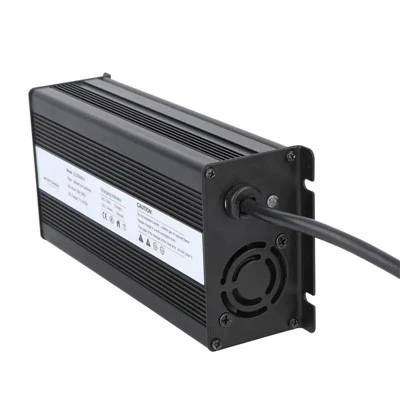
Understanding the Basics of Voltage Stabilizers
Before we explore the number of appliances a voltage stabilizer can support, it’s essential to understand how a voltage stabilizer works. A voltage stabilizer monitors the incoming voltage and adjusts it to a stable output voltage. It does this by using transformers, relays, or electronic circuits to either increase or decrease the voltage as needed.
The capacity of a voltage stabilizer is typically measured in volt – amperes (VA) or kilovolt – amperes (kVA). This rating indicates the amount of electrical power the stabilizer can handle. For example, a 1000 VA voltage stabilizer can theoretically support up to 1000 VA of electrical load.
Factors Affecting the Number of Supported Appliances
Determining how many appliances a voltage stabilizer can support isn’t just a simple matter of counting. Several crucial factors come into play:
1. Power Rating of Appliances
Each appliance has a specific power rating, usually indicated in watts (W). To convert from watts to volt – amperes, you need to consider the power factor. For most resistive appliances like incandescent bulbs, the power factor is close to 1, which means the wattage is approximately equal to the volt – amperes. However, for inductive or capacitive appliances such as motors, refrigerators, and air conditioners, the power factor is less than 1, usually between 0.6 and 0.9.
For instance, a 1000 – watt incandescent bulb has a power factor of 1, so it consumes approximately 1000 VA. On the other hand, a 1000 – watt refrigerator with a power factor of 0.7 may consume around 1429 VA (1000 / 0.7). Therefore, when calculating the load on a voltage stabilizer, you must take the power factor of each appliance into account.
2. Starting Current
Some appliances, especially those with motors, require a much higher current to start than to run. This is known as the starting current or inrush current. For example, a refrigerator may draw 3 to 5 times its normal running current when starting up. A voltage stabilizer must be able to handle this temporary surge in current without tripping or malfunctioning.
If you plan to connect multiple appliances that have high starting currents, you need to choose a voltage stabilizer with a sufficient capacity to handle these surges. Otherwise, the stabilizer may not be able to provide enough power during startup, leading to damage to the appliances or the stabilizer itself.
3. Simultaneous Usage
The number of appliances a voltage stabilizer can support also depends on whether they are used simultaneously. If you have several appliances but only use a few at a time, you can choose a voltage stabilizer with a lower capacity. However, if all the appliances are likely to be used at the same time, you need a stabilizer that can handle the combined load of all the appliances.
For example, in a small office, you may have a computer, a printer, a scanner, and a few lights. If you only use one or two of these appliances at a time, a relatively small voltage stabilizer may be sufficient. But if you need to use all of them simultaneously, you’ll need a larger – capacity stabilizer.
4. Efficiency of the Voltage Stabilizer
The efficiency of a voltage stabilizer also affects its ability to support appliances. No voltage stabilizer is 100% efficient; some energy is always lost in the form of heat. A more efficient stabilizer will waste less energy and be able to provide more usable power to the connected appliances.
Calculating the Number of Supported Appliances
To calculate how many appliances a voltage stabilizer can support, follow these steps:
- Determine the power ratings of all appliances: Check the nameplates of the appliances to find their power ratings in watts. If the power factor is not given, assume a value based on the type of appliance (e.g., 1 for resistive appliances, 0.7 – 0.9 for inductive appliances).
- Convert the power ratings to volt – amperes: Divide the wattage by the power factor to get the volt – amperes.
- Account for the starting current: If an appliance has a high starting current, multiply its normal VA rating by a factor (e.g., 3 – 5) to account for the startup surge.
- Sum up the total VA load: Add up the VA ratings of all the appliances, taking into account the starting current of the appropriate appliances.
- Choose a voltage stabilizer: Select a voltage stabilizer with a capacity (in VA) that is equal to or greater than the total VA load. It’s also a good idea to choose a stabilizer with a slightly higher capacity to account for any future additions or unexpected power surges.
Practical Examples
Let’s look at some practical examples to illustrate how to calculate the number of appliances a voltage stabilizer can support.
Example 1: Home Entertainment Setup
Suppose you have a home entertainment setup consisting of a 50 – inch LED TV (100 W, power factor = 0.9), a sound system (200 W, power factor = 0.8), and a gaming console (150 W, power factor = 0.9).
- TV: VA = 100 / 0.9 ≈ 111 VA
- Sound system: VA = 200 / 0.8 = 250 VA
- Gaming console: VA = 150 / 0.9 ≈ 167 VA
The total VA load is approximately 111 + 250+167 = 528 VA. In this case, a 600 VA voltage stabilizer would be sufficient.
Example 2: Small Workshop
In a small workshop, you have a drill press (500 W, power factor = 0.7, starting current factor = 3), a bench grinder (300 W, power factor = 0.8, starting current factor = 2), and a soldering iron (100 W, power factor = 1).
- Drill press (running): VA = 500 / 0.7 ≈ 714 VA
- Drill press (starting): VA = 714×3 = 2142 VA
- Bench grinder (running): VA = 300 / 0.8 = 375 VA
- Bench grinder (starting): VA = 375×2 = 750 VA
- Soldering iron: VA = 100 VA
If you start the drill press and the bench grinder one after another, the maximum total VA load would be 2142+375 + 100 = 2617 VA. In this case, you would need a voltage stabilizer with a capacity of at least 3000 VA to handle the starting currents.
Conclusion
In conclusion, the number of appliances a voltage stabilizer can support depends on multiple factors, including the power ratings of the appliances, the power factor, starting currents, simultaneous usage, and the efficiency of the stabilizer. By carefully calculating the total VA load of your appliances and considering these factors, you can choose the right voltage stabilizer for your needs.
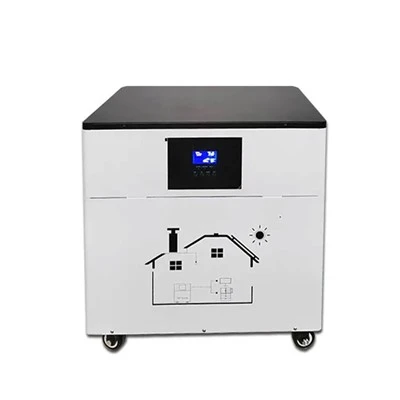
As a voltage stabilizer supplier, I have a wide range of stabilizers with different capacities to meet various requirements. Whether you are setting up a home entertainment system, a commercial office, or an industrial workshop, I can provide you with the best – fitting voltage stabilizer solutions.
3 Phase Stabilizer If you are interested in purchasing voltage stabilizers or need more information about our products, feel free to contact me for further discussions. We are committed to offering high – quality products and professional services to ensure the safety and stability of your electrical appliances.
References
- Electric Power Systems, Principles and Analysis by J. Duncan Glover, Mulukutla S. Sarma, and Thomas J. Overbye
- Handbook of Electric Power Calculations by Hadi Saadat
- Understanding Electrical Engineering by Rob Irving
Huizhou Qiangfeng Power Technology Co., Ltd.
Huizhou Qiangfeng Power Technology Co., Ltd. is one of the most professional votage stabilizer manufacturers and suppliers in China, featured by quality products and good service. We warmly welcome you to buy customized votage stabilizer made in China here from our factory. If you have any enquiry about quotation and free sample, please feel free to email us.
Address: No. 28, Hu’ao Avenue, Shiwan Town, Boluo County, Huizhou City, Guangdong Province
E-mail: Komco@Jinlidianqi.cn
WebSite: https://www.autobatterychargers.com/
