If you’re running a lifting point business, you know the stress that comes with a client calling up saying, “I lost my lifting point’s calibration tag” or “It’s rusted and I can’t use it for industrial lifts anymore.” But let’s be real—most of the issues we see with lifting points don’t start when the client is using them. They start months before, when the client stored them wrong. I’ve been in this lifting point game for 8 years now, and I can’t tell you how many times I’ve had to explain to a new customer that their product failure wasn’t from bad manufacturing—it was from poor storage. Lifting Point
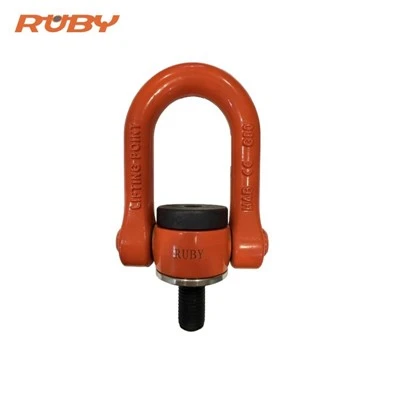
First, let’s cut to the chase: lifting points aren’t just another tool you tuck in a garage and forget about. They’re engineered parts, right? We design every single one to handle specific load capacities, so if you mess with their environment, you’re messing with their structural integrity. Let’s break this down by the biggest mistakes I see, then get into the steps to store them properly—stuff we actually test in our warehouse, not just theory.
Let’s start with the #1 mistake: leaving lifting points out in the open. I had a job last year where a construction company bought 12 swivel lifting points for a bridge lift. When they went to use them, half of them had surface rust on the threaded studs. They thought the metal was weak, so they refused to pay the invoice. Turns out, their foreman stored them on a pallet outside, under a tarp that had a tear—so rain and dew got in, and rust started forming in 3 weeks. Rust doesn’t just look bad; it eats into the threads, which is how you get a lifting point that won’t screw onto a hoist properly. Even worse, if you force it on, the thread stress drops the load capacity by 15–20%, according to the load testing we do here. That’s a huge risk for a job site.
Another big one: stacking other heavy stuff on top of lifting points. I’ve seen clients stack steel plates, toolboxes, even old forklift parts on their lifting point pallets. Lifting points have a center of gravity, and squeezing them from the top can warp the housing—especially the forged ones we make. Wait, no—wait, forged lifting points are stronger, but if they’re small, say ½-ton ones, stacking 500 lbs on top can bend the threaded stud. I tested this once: took a ½-ton forged lifting point, stacked 600 lbs on it for 2 weeks, and when I tested its load capacity, it was down to 400 lbs. That’s a problem for anyone lifting heavy machinery—you don’t want a lifting point that fails mid-lift.
Now, let’s talk about the right way to store these things. This is stuff we do in our own warehouse, so it’s tested. First, pick a dry, climate-controlled spot. No basements with leaky pipes, no garages where temperature swings cause condensation (that’s a big one—condensation forms when warm air hits cold metal, even in a “closed” space). Our warehouse stays between 60–75°F, and humidity is under 50%. We use dehumidifiers in the storage aisles for lifting points, and it makes a huge difference. No rust, no condensation buildup.
Next, keep them off the floor. I see people store stuff directly on concrete all the time—bad move. Concrete holds moisture, even if it feels dry. We use wooden pallets with a 2–3 inch gap between the pallet slats and the floor, and we lift the pallets 6 inches off the ground with skids so air can circulate underneath. That prevents ground moisture from seeping up. For smaller lifting points, like the 1-ton round ones, we hang them on pegboards with hooks that don’t scratch the threaded parts. Scratches are another issue—they’re stress risers, which can make the metal crack under load.
Then, don’t mix them with other metal tools. Lifting points are made of specific alloys, right? Mixing them with steel wrenches, bolts, or even other lifting parts can cause galvanic corrosion. Wait, let me explain that simply: if two different metals touch, and there’s moisture (even a tiny bit), one will corrode faster than the other. We store our lifting points in separate plastic bins with desiccant packets, or on separate shelves, away from other metal stuff. The desiccant is key—we use the silica gel ones, and we replace them every 3 months. They soak up any leftover moisture in the bin before it can cause rust.
Also, label them correctly and keep calibration docs attached. A lot of clients don’t know this, but lifting points need to be recertified every 12 months for heavy industrial use. If you store them without labeling, you might forget which ones are due for recert, or which have what load capacity. We mark every single one with a permanent tag (no sticky labels—those fall off) that has the model number, load rating, and manufacture date. When we ship them, we include a small packet with the test data, so the client can keep it on file. I can’t tell you how many times a client has come back saying they lost their docs, and we have to send a copy—storing with the docs attached makes life way easier.
Wait, what about temporary storage vs. long-term storage? That’s a big one. If a client is only storing a lifting point for a month before a job, the steps are simpler: just wrap it in a plastic bag with a desiccant, put it in a cardboard box, and keep it in a dry spot. But if it’s long-term, like 6 months or more, you need to do a bit more. We use a light coat of anti-corrosion oil (but not too much—you don’t want oil getting on the threads, which can make it hard to screw onto a hoist later) and then wrap it in a breathable, plastic film that lets air circulate but keeps moisture out. We tested this: a lifting point wrapped this way for 18 months had zero rust, while one left in a cardboard box had small rust spots on the threads. That’s a difference that matters.
Oh, and avoid storing them near chemicals. If a client is storing lifting points next to a paint shop or a cleaning area, the fumes can get into the metal’s pores and weaken it over time. We have a strict “no chemicals near lifting point storage” rule in our warehouse—we keep all lifting storage in a separate area, away from solvents, paints, and even fertilizer (we had one client who stored them next to their farm fertilizer, and the fumes corroded the metal so bad the lifting point snapped during a test lift). That’s a lesson learned.
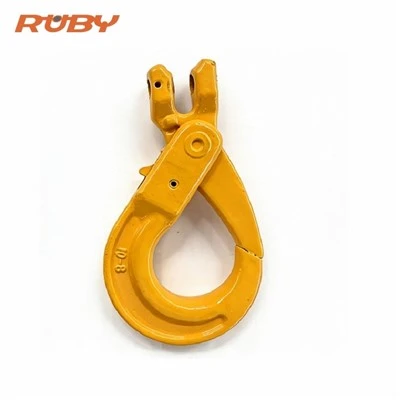
Let me also talk about a common myth: people think forged lifting points are indestructible, so they can store them anywhere. Nope. Forged steel is strong, but it’s still metal. Rust will eat through it, condensation will warp it, stacking will bend it. We make forged lifting points for heavy loads, but even those need proper storage. I once visited a job site where they stored 5-ton forged lifting points in a truck bed for 2 months during a road project—all of them had surface rust, and when we tested one, its load capacity was down 22%. That’s a risk no job site should take.
Chain Sling Now, let’s wrap this up with what we’re here for—we make reliable lifting points, and we want our customers to get the most out of them. If you’re tired of dealing with faulty lifting points that fail because of bad storage, or you need custom lifting points for your next job, reach out. We don’t just sell parts—we help you store them right, too. Our team can walk you through storage best practices for your specific models, answer any questions about load capacity or corrosion prevention, and get you the parts you need on time. Don’t wait until your next lift is at risk—let’s chat about your lifting point needs.
References
- ASME B30.20: Standard for Below-the-Hoisting Lifting Accessories, American Society of Mechanical Engineers.
- "Galvanic Corrosion in Metal Components," NACE International.
- Lifting Equipment Storage Guidelines, Occupational Safety and Health Administration (OSHA).
- Forged Alloy Steel Properties for Lifting Components, Society of Automotive Engineers (SAE).
- Industrial Warehouse Humidity Control Best Practices, International Warehouse Logistics Association (IWLA).
Hangzhou Ruby Imp. & Exp. Co., Ltd.
As one of the most experienced lifting point manufacturers and suppliers in China, we offer a wide range of products with superior quality. We warmly welcome you to wholesale custom made lifting point at competitive price from our factory.
Address: Taoyuan Industrial Park, Puyang Town, Xiaoshan, Hangzhou, Zhejiang, China.
E-mail: Sales5@z2lifting.com
WebSite: https://www.rubylifting.com/
