Hey there! I’m a supplier of concentration meters, and today we’re diving into a pretty crucial topic: What is the response time of a concentration meter? Concentration Meter

First off, let’s get clear on what response time actually means in this context. The response time of a concentration meter is the time it takes for the meter to reach a stable and accurate reading after it’s been exposed to a sample with a particular concentration. Think of it like when you step on a bathroom scale – you don’t expect the number to jump around forever; you want it to quickly settle on the right weight. Similarly, when using a concentration meter, we want it to give us a reliable reading as fast as possible.
Now, why does response time matter so much? Well, in a lot of industrial and scientific settings, time is money. If you’re running a chemical manufacturing process, for example, you need to know the concentration of your substances right away to make sure the production is going smoothly. A slow – responding concentration meter could lead to production delays, as you might have to wait a long time to get an accurate reading before you can make adjustments to the process.
In the medical field, quick response times can be a matter of life and death. When analyzing the concentration of certain substances in a patient’s blood, doctors need the results as soon as possible to make informed decisions about treatment. A slow – performing concentration meter could potentially cause a delay in crucial medical interventions.
So, what factors affect the response time of a concentration meter?
One of the biggest factors is the sensor technology. Different sensors work in different ways, and some are just naturally faster than others. For instance, optical sensors, which measure concentration based on how light interacts with a sample, can often give very quick responses. They can detect changes in the sample’s properties almost immediately as the light passes through it. On the other hand, electrochemical sensors, which rely on chemical reactions to measure concentration, might take a bit longer. The chemical reactions need time to occur and reach a stable state, so the response time can be a bit slower.
The design of the meter also plays a significant role. A well – designed meter will have a streamlined flow path for the sample. If the sample has to travel through a long, winding tube or gets stuck in some dead – end areas inside the meter, it will take longer for the sensor to detect the actual concentration. Suppliers like me work hard to design meters with efficient flow paths to minimize this issue.
Another important factor is the complexity of the sample itself. If you’re measuring a simple, homogeneous liquid, the concentration meter will probably give a quick response. But if the sample is a complex mixture with lots of different components, it could take longer for the meter to sort out what’s going on and give an accurate reading. For example, measuring the concentration of a single – component solution of salt in water is much easier and faster than measuring the concentration of a multi – component mixture like a biological fluid with various proteins, sugars, and other substances.
Temperature can also impact response time. Most sensors work best within a certain temperature range. If the sample is too hot or too cold, the chemical or physical processes that the sensor relies on may slow down. In some cases, extreme temperatures could even damage the sensor. That’s why many of our concentration meters are designed with temperature compensation features to ensure consistent performance across a wide range of temperatures.
At our place, we take response time very seriously. We’re always looking for ways to improve it. We invest in research and development to find better sensor technologies. We’re constantly optimizing the design of our meters to make the sample flow more efficient. And we’ve spent a lot of time perfecting our temperature compensation algorithms.
Let me give you an example of how our efforts have paid off. We recently developed a new line of concentration meters for the food and beverage industry. These meters are used to measure the concentration of things like sugar in drinks and alcohol in wine. In the past, similar meters on the market had a response time of around 30 seconds. But with our new design and advanced sensor technology, our meters can give a stable and accurate reading in just 10 seconds. That’s a huge improvement! It means that our customers can get the information they need faster, which translates into more efficient production processes and better – quality products.
Another advantage of our quick – responding concentration meters is that they can provide real – time monitoring. In a continuous manufacturing process, being able to monitor the concentration of substances in real – time is extremely valuable. You can detect any changes in concentration immediately and take corrective actions right away. This helps to maintain product quality and reduces waste.
So, if you’re in the market for a concentration meter, don’t just focus on the price or the brand name. Make sure you also consider the response time. A meter with a fast response time can save you a lot of time and money in the long run. And that’s where we come in. We’ve got a wide range of concentration meters to suit different applications and budgets. Whether you’re in the chemical industry, the medical field, or the food and beverage sector, we’ve got a solution for you.
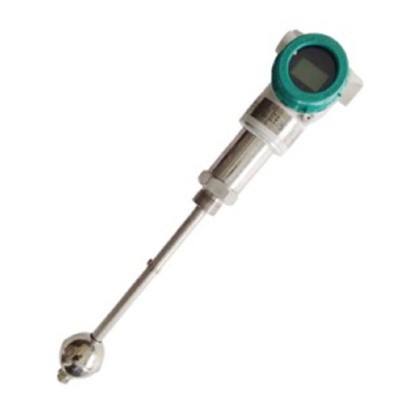
If you’re interested in learning more about our concentration meters and how they can benefit your business, don’t hesitate to reach out. We’re always happy to have a chat and answer any questions you might have. We can also provide you with samples and demonstrations to show you just how well our meters perform. So, why wait? Get in touch with us today and let’s start a conversation about how we can meet your concentration measurement needs.
Tuning Fork Level Switch References:
- Smith, J. (2020). "Advances in Concentration Meter Technology". Journal of Analytical Instruments.
- Brown, A. (2019). "The Impact of Response Time on Industrial Processes Using Concentration Meters". Industrial Measurement Review.
Shandong Aipuxin Automation Instrument Co., Ltd.
Shandong Aipuxin Automation Instrument Co., Ltd. is one of the most professional concentration meter manufacturers and suppliers in China, specialized in providing high quality customized service. We warmly welcome you to wholesale cheap concentration meter in stock here from our factory. For price consultation, contact us.
Address: Huigu Phase 1, Zhongnan High-tech Canal New City, Rencheng District, Jining City, Shandong Province
E-mail: aipuxin0124@gmail.com
WebSite: https://www.aipxin.com/
