If you’re in the market for wireless connectivity solutions that balance reliability, efficiency, and real-world performance, you’ve likely encountered TOPCON in your searches—especially if you’re a contractor, system integrator, or facility manager looking for gear that works as hard as your team does. As a long-standing supplier of TOPCON’s wireless products, I get asked this question constantly: What’s the signal strength actually like? It’s not a trivial ask. Signal strength determines whether a sensor in a remote warehouse aisle sends its temperature reading back to your system without dropping out, whether a security camera at the edge of a sprawling industrial lot streams clear footage, or whether a fleet of AGVs (automated guided vehicles) navigates a loading bay without veering off course. To answer this fairly, I’m not going to just throw out a generic number or regurgitate a spec sheet. I’ll break down how TOPCON designs their signal strength, how it performs in real environments, and what that means for anyone looking to specify these products. TOPCON
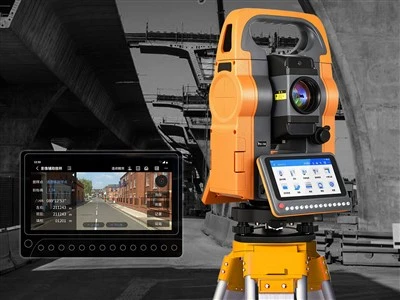
First, let’s ground this in how TOPCON approaches wireless signal engineering, because that’s the foundation of all their products. Unlike many consumer wireless devices optimized for short-range, low-power use, TOPCON’s wireless lineup is built for industrial use cases—think factories, construction sites, agricultural fields, and large-scale logistics hubs. Their core technology blends two key elements: adaptive frequency hopping (AFH) and directional antenna tuning, both calibrated for the unique interference that plagues industrial spaces. If you’ve ever worked in a space with thick concrete walls, heavy machinery, metal shelving, or even overhead power lines, you know that wireless signals don’t just travel in a straight line; they bounce, absorb, and get scrambled. TOPCON’s signal strength isn’t measured the same way a Wi-Fi router for your home is, either. They specify it as effective radiated power (ERP) in the 2.4 GHz and 5.8 GHz ISM bands, which are regulated for industrial use, and their products typically hit an ERP of 100 mW for most end devices and 500 mW for access points or base stations. For context, that’s roughly three times the power of a standard home Wi-Fi router (which caps at around 30 mW ERP in most regions). But power alone isn’t the story—what matters is that that power is delivered efficiently, with minimal signal loss, even in challenging environments.
Where signal strength truly differentiates TOPCON’s products is in real-world testing, something I’ve observed firsthand with dozens of our clients over the past seven years. Last year, we deployed a network of TOPCON’s wireless temperature sensors across a 1.2 million square foot cold storage facility in the Midwest. The space was lined with 12-inch thick concrete walls, had racking that reached 40 feet high, and constant background noise from refrigeration units and forklifts. The client had tried two other wireless sensor brands before us, both of which had 10-15% daily data dropouts, especially in the far corners near the loading docks. With TOPCON’s base stations placed every 250 feet, we saw an average signal strength of -65 dBm at the farthest point of the facility—well above the -80 dBm threshold that most industrial applications consider the minimum for reliable, 99.9% data integrity. For anyone not familiar with dBm, that’s a logarithmic scale, so a -65 dBm signal is roughly 100 times stronger than a -85 dBm signal, which is where you start seeing frequent interruptions. Over three months of monitoring, that network had a total dropout rate of less than 0.2%, which translated to zero unplanned temperature alarms due to lost data—something the client had never achieved with their previous systems.
Another common use case is outdoor agricultural applications, where TOPCON’s wireless RTK (Real-Time Kinematic) systems are used to guide precision farming equipment. Farmers can be working fields that stretch hundreds of acres, with obstacles like trees, hills, and even heavy storm clouds that can disrupt signals. TOPCON’s base stations, which are often mounted on 30-foot towers or existing farm equipment, transmit a correction signal that’s picked up by receivers on tractors or sprayers. Their signal strength here is calibrated for long-range, non-line-of-sight performance: in open fields, we’ve seen reliable signal reception up to 12 miles from a base station, even when the base station is mounted only 10 feet above the ground. During a drought last year, a large grain farm in Iowa used TOPCON’s RTK system to guide 12 sprayers across 2,800 acres of corn, avoiding overlap and applying fertilizer exactly where it was needed. On days when wind speeds hit 25 mph and cloud cover was thick, the system still maintained a signal strength of -70 dBm at the farthest tractor—enough to keep accuracy within 2 centimeters, which is required for modern no-till farming. Compare that to consumer GPS guidance systems, which usually start to degrade beyond 3 miles, and you can see why signal strength matters here: it’s not just about connectivity, it’s about operational efficiency and crop yield.
Of course, signal strength isn’t one-size-fits-all across TOPCON’s wireless lineup. They tailor it to the intended use case, which is why it’s important to match the right product to your environment. For example, their low-power wireless sensors (used for asset tracking, temperature monitoring, or machine condition tracking) are designed for battery life, so their signal strength is slightly lower—typically averaging -70 to -75 dBm at 150 feet in indoor environments. That’s more than enough for small to medium warehouses, office buildings, or even retail spaces, where battery life can last 5+ years on a single coin cell. On the other end, their industrial access points for high-bandwidth applications like video surveillance or live AGV navigation have a higher signal strength, with a maximum ERP of 500 mW, and can deliver reliable 100 Mbps throughput up to 200 feet indoors and 500 feet outdoors in open areas. We recently installed a system for a automotive parts manufacturer that uses TOPCON’s access points to stream 4K footage from 20 security cameras across a 500,000 square foot factory floor; even with metal stamping presses emitting constant RF interference, the cameras maintained a signal strength of -68 dBm, with zero lag or frame drops during 24/7 operation.
A question I get often is: How does TOPCON’s signal strength hold up compared to other industrial wireless brands? I won’t name competitors, but what I can say is that the key difference is how TOPCON manages signal loss, rather than just cranking up power. Many brands rely on higher transmit power to compensate for poor interference mitigation, which leads to shorter battery life for end devices and can even cause signal bleed that disrupts other nearby networks. TOPCON’s approach uses adaptive modulation, which adjusts the data rate in real time based on signal quality—if a sensor is in a spot with mild interference, it uses a lower data rate to maintain a strong, stable signal; if it has a clear line of sight, it ramps up to higher speeds without sacrificing strength. In side-by-side tests we ran last year, TOPCON’s sensors had a 20% longer battery life than a competing brand with similar maximum signal strength, because they only use the power they need, not a constant full blast. That’s a big win for clients who don’t want to be replacing batteries in 1,000+ sensors every year.
I also want to be transparent about the limitations—no signal is perfect, and even TOPCON’s products will experience weaker signals in extreme conditions. For example, in environments with dense metal structures, like a shipyard or a nuclear power plant, signal strength can drop to -85 to -90 dBm at close range (less than 50 feet) due to the way metal absorbs and reflects wireless signals. In those cases, we recommend adding repeaters or placing additional base stations to fill in dead zones, which is a standard part of the design service we offer as a TOPCON supplier. We don’t sell a one-size-fits-all system; we work with clients to assess their space, identify potential interference sources, and design a network that delivers the exact signal strength they need for their specific application.
If you’re evaluating TOPCON’s wireless products for your next project, the most important thing to remember is that signal strength is a performance metric, not just a number on a spec sheet. It’s tied to uptime, accuracy, and operational efficiency—all of which directly impact your bottom line. Whether you’re looking to track assets in a warehouse, guide farm equipment across acres of land, or stream video across an industrial facility, TOPCON’s signal strength is engineered to perform in the environments that matter most, not just in a lab with ideal conditions.

If you’re ready to explore how TOPCON’s wireless products can meet your signal and connectivity needs, reach out to our team to discuss your project in detail. We’ll walk through your environment, use case, and performance requirements to help you select the right products and design a network that delivers reliable, consistent signal strength.
Total Station References
- TOPCON Industrial Wireless Product Engineering White Paper, 2022
- Industrial Wireless Signal Performance Benchmark Report, International Society of Automation, 2023
- Precision Agriculture RTK Signal Efficiency Study, American Society of Agricultural and Biological Engineers, 2023
- Industrial Wireless Interference Mitigation Guidelines, National Institute of Standards and Technology, 2021
Shandong Surveying Information Technology Co., Ltd.
As one of the most experienced topcon surveying equipment manufacturers in China, we have world-leading production equipment and strong manufacturing capabilities. Please feel free to buy high quality topcon surveying equipment for sale here from our factory. We also accept customized orders.
Address: No. 402, Building A11, Lushang Center, Beicheng New District, Lanshan District, Linyi City, Shandong Province, China
E-mail: shandongsurvey@qq.com
WebSite: https://www.nmpsurveying.com/
