Can High – frequency Visual Line be seen by the naked eye? High-frequency Visual Line
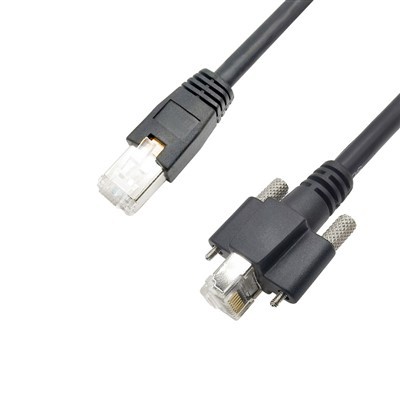
As a supplier in the field of high – frequency visual line products, I’ve often been asked the question: Can high – frequency visual lines be seen by the naked eye? This is not only a matter of scientific curiosity but also has significant implications for our customers who rely on our high – quality high – frequency visual line solutions.
To understand whether high – frequency visual lines can be seen by the naked eye, we first need to define what high – frequency visual lines are. High – frequency visual lines typically refer to visual signals or patterns that operate at relatively high frequencies. In the context of our products, these lines can be used in various applications, such as in digital displays, optical sensors, or high – speed imaging systems.
The human eye is a remarkable organ, but it has its limitations. The visual system of the human eye has a specific range of sensitivity in terms of both frequency and wavelength. The visible spectrum for the human eye ranges approximately from 380 to 750 nanometers in wavelength. This corresponds to frequencies in the range of about 400 – 790 terahertz. However, when we talk about high – frequency visual lines in the context of our products, we are often dealing with frequencies that go beyond the normal perception range of the human eye.
For example, in some high – speed digital displays, the refresh rate can be extremely high. A typical consumer – grade monitor might have a refresh rate of 60 – 144 Hz, which is well within the range of human perception. But in more advanced applications, such as in high – end gaming monitors or professional video production equipment, the refresh rate can reach 240 Hz or even higher. At these frequencies, the human eye may struggle to distinguish the individual frames or visual lines.
In addition to the refresh rate, the concept of high – frequency visual lines also involves the sharpness and clarity of the lines. When the frequency of the visual pattern is too high, the eye may not be able to resolve the individual details. This is related to the spatial frequency response of the human visual system. Our eyes have a limited ability to distinguish fine details, especially when they are presented in rapid succession.
However, it’s important to note that there are some cases where the human eye can detect high – frequency visual effects indirectly. For instance, if a high – frequency visual line causes a flicker or a subtle change in brightness or color that is within the range of human perception, the eye may notice a general sense of instability or discomfort. This is known as the flicker fusion threshold, which is the frequency at which a flickering light appears to be a continuous light. For most people, the flicker fusion threshold is around 50 – 60 Hz, but it can vary depending on factors such as the intensity of the light, the background illumination, and individual differences in vision.
Another aspect to consider is the adaptation of the human eye. Our eyes are constantly adapting to different lighting conditions and visual stimuli. When exposed to a high – frequency visual line over a period of time, the eye may become more sensitive to certain aspects of the pattern. For example, if a high – frequency line pattern is presented in a consistent manner, the eye may start to detect subtle differences in contrast or color that were not initially apparent.
As a supplier of high – frequency visual line products, we understand the importance of these scientific principles in the design and development of our products. We use advanced technologies to optimize the performance of our high – frequency visual lines. For digital displays, we employ techniques such as anti – flicker algorithms and high – speed data processing to ensure that the visual output is both smooth and stable. In optical sensors, we carefully calibrate the sensitivity and response time to capture high – frequency visual signals accurately.
In the automotive industry, high – frequency visual lines are used in advanced driver – assistance systems (ADAS). These visual lines can provide important information about the vehicle’s surroundings, such as lane markings and object detection. Although the frequencies involved in these applications are often high, the display is designed in a way that the essential information can be easily perceived by the driver. The use of appropriate colors, contrast, and size ensures that the high – frequency visual lines are not only detectable but also interpretable.
In the medical field, high – frequency visual lines are used in endoscopy and other imaging technologies. These visual lines can help doctors to identify and analyze the internal structures of the body more accurately. However, since these images are often displayed on monitors, the challenge lies in presenting the high – frequency visual information in a way that is clear and understandable for the medical professionals.
Despite the challenges associated with the visibility of high – frequency visual lines to the naked eye, our products are designed to meet the diverse needs of our customers. We conduct extensive research and development to improve the performance of our high – frequency visual line solutions. Our team of experts is constantly exploring new materials and technologies to enhance the visibility and functionality of our products.
If you are in the market for high – quality high – frequency visual line products, we invite you to contact us for a procurement discussion. Our experienced sales team can provide you with detailed information about our product range, technical specifications, and pricing. We are committed to providing the best solutions for your specific requirements, whether you are in the digital display industry, automotive sector, medical field, or any other application that requires high – frequency visual line technology.

In conclusion, while high – frequency visual lines may not always be directly visible to the naked eye due to the limitations of the human visual system, our products are designed to make the most of the available visual perception capabilities. Through continuous innovation and technological advancement, we strive to provide our customers with products that offer clear, reliable, and high – performance high – frequency visual line solutions.
Infiniband Series Camera Link HS Cable References
Gegenfurtner, K. R., & Sharpe, L. T. (1999). Color vision: From genes to perception. Cambridge University Press.
Wandell, B. A. (1995). Foundations of vision. Sinauer Associates.
Schwartz, S. H. (1999). Vision: A computational investigation into the human representation and processing of visual information. MIT Press.
Karobert Technology LLC Karobert Trading PTE. LTD.
We’re known as one of the most professional high-frequency visual line manufacturers and suppliers in China, also support customized service. Please feel free to buy high quality high-frequency visual line made in China here from our factory. For price consultation, contact us.
Address: 6250 S 196th St, Kent, WA, 98055, USA.
E-mail: karl@karobert-us.com
WebSite: https://www.karobert-us.com/
