Hey there, folks! I’m a supplier of corrugated transformer tanks, and I’ve been in this game for quite a while. One question that comes up a lot is how these tanks deal with short – circuit conditions. Well, let’s dive right in and explore this topic. Corrugated Transformer Tank
Understanding Short – Circuit Conditions in Transformers
First off, we need to understand what a short – circuit in a transformer is. A short – circuit occurs when there’s an abnormal, low – resistance connection between two points in an electrical circuit. In a transformer, this can happen due to various reasons like insulation breakdown, conductive foreign objects getting into the system, or electrical surges.
When a short – circuit happens, it causes a huge increase in current flow. This high – current situation can generate an enormous amount of heat and mechanical stress on the transformer components. If not properly managed, it can lead to serious damage, such as melting of windings, deformation of core structures, and even complete failure of the transformer.
How Corrugated Transformer Tanks Come into Play
Mechanical Strength
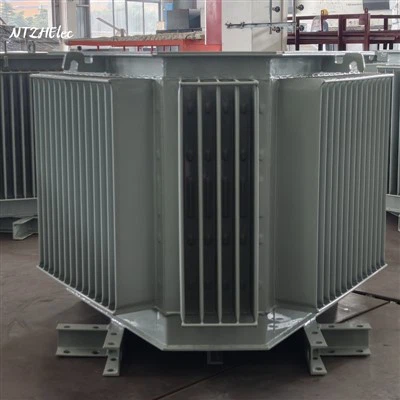
One of the key features of corrugated transformer tanks is their strong mechanical structure. The corrugations are not just for show; they play a vital role in dealing with the mechanical stress caused by short – circuits.
When a short – circuit occurs, the high – current flow creates strong electromagnetic forces. These forces can try to push and pull the transformer windings and other internal components. The corrugated design of the tank provides extra rigidity. It acts like a shield, helping to contain the mechanical forces within the tank and preventing them from causing excessive deformation.
For example, the corrugations act as ribs, distributing the stress more evenly across the tank surface. This is similar to how the ribs in a car’s bodywork help it withstand impacts. Without this strong structure, the tank could easily warp or rupture under the intense mechanical stress of a short – circuit.
Heat Dissipation
Another major issue during a short – circuit is the heat generated. The large increase in current leads to more power dissipation in the form of heat according to Joule’s law (P = I²R, where P is power, I is current, and R is resistance). If this heat isn’t dissipated quickly, it can cause the temperature inside the transformer to rise to dangerous levels.
Corrugated transformer tanks are great at heat dissipation. The corrugations increase the surface area of the tank. A larger surface area means more contact with the surrounding air, which enhances the natural convection process. As the hot air around the tank rises, cooler air rushes in to take its place, carrying away the heat.
We’ve done some tests in our lab, and we’ve found that a corrugated tank can dissipate heat much faster than a plain – sided tank. This is crucial because keeping the temperature in check helps to protect the insulation of the transformer windings and other components. If the insulation gets too hot, it can break down, leading to more short – circuits and further damage.
Oil Containment and Circulation
Most transformers use oil as a coolant and an insulating medium. During a short – circuit, the oil plays a very important role in absorbing and transferring heat.
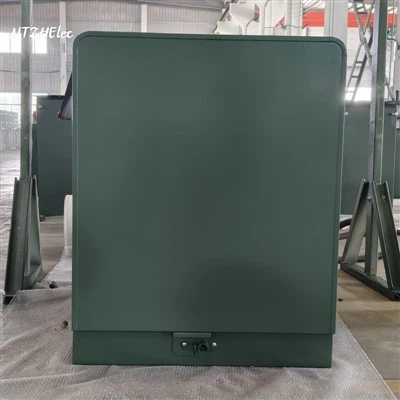
The corrugated transformer tank is designed to hold the oil securely. It has a tight – fitting structure that prevents oil leakage, even under the high – pressure conditions created by a short – circuit. This is important because if the oil leaks out, the transformer loses its cooling and insulating capabilities, which can quickly lead to a catastrophic failure.
Moreover, the corrugations can also assist in the oil circulation inside the tank. The shape of the corrugations can create channels for the oil to flow. As the oil heats up near the hot components, it rises and moves along these channels. Cooler oil then flows in to replace it, creating a natural circulation pattern. This continuous circulation helps to maintain a more uniform temperature inside the transformer and improves the overall cooling efficiency.
Design Considerations for Dealing with Short – Circuits
Material Selection
When we’re making corrugated transformer tanks, we pay a lot of attention to the materials we use. We typically use high – quality steel that has good mechanical properties and corrosion resistance.
For example, we use steel with a certain level of yield strength. This ensures that the tank can withstand the mechanical stress during a short – circuit without deforming too much. We also apply special coatings to the steel to protect it from corrosion over time. Corrosion can weaken the tank structure, making it more vulnerable to the effects of short – circuits.
Corrugation Design
The design of the corrugations is also carefully thought out. The height, width, and spacing of the corrugations all affect the tank’s performance in dealing with short – circuits.
A taller and wider corrugation can provide more mechanical strength, but it may also affect the heat dissipation characteristics. We need to find the right balance. Through a lot of research and testing, we’ve come up with corrugation designs that offer both good mechanical support and efficient heat dissipation.
Real – World Examples
I’ve seen firsthand how well our corrugated transformer tanks work in real – world situations. We had a customer who was using our tanks in a industrial power substation. One day, there was a major short – circuit due to a lightning strike.
When the short – circuit occurred, the transformer experienced a huge increase in current. But thanks to our corrugated tank, the mechanical stress was contained, and the heat was dissipated quickly. The transformer was able to recover after minor repairs, and the tank remained intact. This was a great example of how our tanks can effectively deal with short – circuit conditions.
Why Choose Our Corrugated Transformer Tanks
If you’re in the market for transformer tanks, there are several reasons why you should consider our products.
Firstly, our tanks are designed and built with the highest quality standards. We use the best materials and the latest manufacturing techniques to ensure that they can handle short – circuit conditions and other challenges.
Secondly, we offer excellent customer service. Our team of experts is always available to answer your questions and provide technical support. Whether you need help with installation, maintenance, or troubleshooting, we’ve got your back.
Finally, we’re committed to continuous improvement. We’re constantly researching and developing new designs and technologies to make our tanks even better. So, you can be sure that you’re getting a product that’s at the forefront of the industry.
Power Transformer Oil Tank If you’re interested in our corrugated transformer tanks and want to learn more about how they can meet your specific needs, or you’re ready to start a procurement discussion, don’t hesitate to get in touch. We’re looking forward to working with you to find the perfect solution for your transformer applications.
References
- Electrical Power Transformer Engineering: Design and Application by George W. T. Arkkio
- Transformer Engineering: Design, Technology, and Diagnostics by G. K. Dubey
Nantong Zhihe Electric Co., Ltd.
As one of the most professional corrugated transformer tank manufacturers and suppliers in China, we’re featured by quality products and low price. Please rest assured to wholesale cheap corrugated transformer tank made in China here from our factory. Customized orders are welcome.
Address: NO.202 Jianghai West Road, Hai’an Town, Hai’an City, Jiangsu Province
E-mail: colt.ntzh@gmail.com
WebSite: https://www.ntzhelectric.com/
