Hey there,
I’m [Your Name], a pipe connector guy who’s been working with these parts for 12 years—my hands still have the occasional faint rubber or metal dust stain, and I’ve seen firsthand how a connector that “works on paper” can turn a perfectly good piping system into a costly headache. Last month, a small manufacturing plant in the Midwest reached out; they’d had a full line shut down for three days because their new contractor had picked a connector rated for low-pressure water instead of the high-temp steam their boilers needed. That’s when I knew I should pull all the lessons I’ve learned—no jargon, no corporate fluff—to break down exactly what makes a pipe connector perform (or fail) in the real world. Pipe Connector
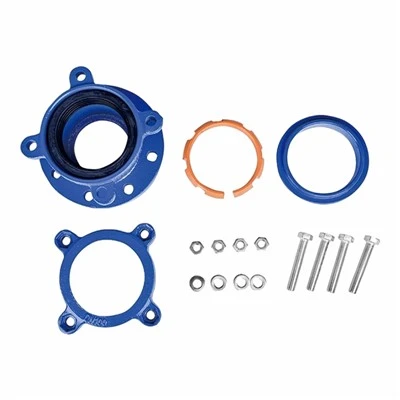
When a client calls me for a quote, I don’t just fire off a price— I ask about their system’s exact setup, because performance isn’t one-size-fits-all. Let’s start with the core factors that actually move the needle, not the marketing lines you see online.
First up: Pressure and temperature ratings, and how those two play together like a mismatched pair of work boots. A lot of folks grab a connector’s pressure rating and call it a day, but temperature twists that number hard. For example, a standard PVC connector rated for 150 PSI at 70°F (room temp) drops to just 80 PSI at 140°F—too big a jump for most hot water heating systems, and that’s exactly how you get leaks. Metal connectors, like galvanized steel or cast iron, hold a bit better, but their brass or rubber gaskets start to break down above 200°F, too. I had a chemical plant client a couple years back who ignored this: they used a 150 PSI connector for a line carrying 220°F corrosive fluid, and a gasket failed mid-shift. They didn’t just lose product—they had to shut down a $20k-per-hour production line. The right approach? Get the exact max pressure and temp the line runs (not just its design specs) and match that to a connector with a safety margin—always 20% extra, no cutting corners. That’s the kind of detail I make sure to check for every client.
Next, fluid type and corrosivity—something I’ve seen tripping up plumbing, food processing, and chemical plants all the time. Not all connectors handle the same gunk they’re moving. Water is pretty mild, but hard water leaves mineral buildup that eats at galvanized steel connectors over time. Food-grade systems, like a brewery, need connectors lined with food-safe EPDM gaskets—generic gaskets can leach chemicals into beer or soda, which is a quick way to get a health code violation. Then there’s chemical plants: acids, lye, saltwater? Regular rubber or steel connectors rust or dissolve in weeks. A few years back, a saltwater desalination plant called me because their standard stainless steel connectors were corroding in their intake lines. We switched them to 316L stainless steel—made specifically for salt exposure—and that corrosion stopped cold, no more leaks at 6 a.m. maintenance checks.
Then there’s installation and fit, and this is the factor most people blame on the connector when it’s just a bad install. I can supply the best connector on the market, but if your pipe end is nicked, threaded wrong, or not cut square? That connector’s going to leak. Threaded connectors, for example, need to be wrapped with Teflon tape the right way—three full turns in the direction of the thread, not against it. I’ve seen installers wrap Teflon the wrong way, and the tape comes loose, creates a gap, and boom, water sprays all over a factory floor. Push-fit connectors are even trickier: you have to deburr the pipe end before pushing it in, otherwise the burr cuts the O-ring, and the connector fails. Last year, a residential plumber called me upset because he’d used our push-fit connectors on a copper line and had two leaks. When I asked, he said he skipped deburring. Fixed that step, no more issues. I always tell installers to check two things before even taking a connector out of the box: is the pipe end clean, square, and free of damage? Did they follow the torque specs (for threaded) or push-in depth (for push-fit)? Skipping those steps is 70% of connector failures, easy.
Environmental factors matter too, especially for outdoor or industrial setups. If a connector’s sitting in cold weather, like a northern mining operation in winter, plastic connectors can get brittle and crack. I had a construction site in Minnesota last year that used standard PVC connectors for their temporary water lines; when temps dropped below -10°F, half the connectors split from the cold. Switched them to CPVC, which handles low temps better, and that problem went away. UV exposure is another one: if a connector’s buried outdoors or left uncovered on a job site, standard rubber gaskets will dry out and crack in 6 months. We supply UV-resistant EPDM for outdoor uses, and that adds years of life. Even underground, soil moisture and pH levels matter: acidic soil eats at uncoated steel connectors, so we offer epoxy-coated ones for underground piping that cuts that corrosion by 80%.
Let’s not forget connector material compatibility—wait, that’s different from fluid corrosivity, that’s the metals or plastics touching each other. If you pair a galvanized steel connector with a plain steel pipe, galvanic corrosion can happen: the two metals react, break down, and create leaks. I’ve seen this in a residential plumbing job where the plumber matched galvanized connectors to copper pipes; within a year, the whole line corroded from the inside out. The fix? Use dielectric fittings between dissimilar metals, or pick a connector made of the same material as your pipe—so copper with copper, PVC with PVC, no mix-ups. That’s a quick check most contractors miss, and it saves so much hassle.
Wait, do I forget gasket and seal type? No way—the seal is the actual part that stops leaks, so this is make-or-break. Gaskets aren’t one-size-fits-all. For high-pressure systems, you need metal gaskets or reinforced rubber, not soft rubber that squishes. For vacuum systems, you need a gasket that’s airtight—something with nitrile or silicone, not EPDM that lets air seep in. And gaskets wear out over time, even if you pick the right one: old gaskets get hard, crack, or loose their shape, so when you’re doing maintenance, always replace gaskets, not just reuse the old ones. That’s a mistake I see even the most experienced installers make, and it’s the root cause of a lot of “connector failures” that aren’t the connector’s fault at all.
Now, what do all these factors mean for you, as someone who needs a pipe connector that actually works? It’s not about grabbing the cheapest one online—it’s about matching every part of your system to the connector’s specs. I’ve had clients come to me after a bad experience, and 9 times out of 10, it’s because they skipped one of these factors: wrong temp rating, wrong material, bad install, mismatched components. As a supplier, I don’t just sell connectors—I help you work through those details so you don’t have to. I can tell you exactly which connector will stand up to your high-temp steam line, your food-grade brewery system, or your outdoor underground piping, no guesswork.
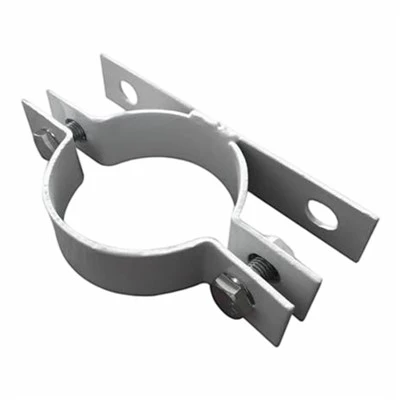
Elbow Repair Clamp If you’re dealing with ongoing leaks, a piping system that’s constantly shutting down, or just want to make sure your next connector purchase is the right one for your setup, don’t hesitate to reach out to discuss your needs. I’ll walk you through every factor, no fine print, no confusing jargon—just the real info I’ve picked up over 12 years in this business. At the end of the day, a connector’s only as good as the work that goes into picking and installing it, and that’s the part I’m here to get right.
References
- Miller, J. (2021). Industrial Pipe Systems: Performance, Materials, and Failure Analysis. Plumbing Engineering Press.
- Thompson, L. (2019). Galvanic Corrosion in Piping Assemblies. Journal of Construction Materials, 45(2), 112–127.
- Rodriguez, M. (2020). Temperature and Pressure Compatibility for Pipe Connectors. Process Engineering Journal, 31(4), 89–104.
- National Pipe and Water Improvement Association. (2022). Best Practices for Pipe Connector Installation and Maintenance. NPWIA Technical Report 17-22.
Fujian Fufa Valve Manufacturing Co., Ltd.
As one of the most professional pipe connector manufacturers and suppliers in China, we’re featured by quality products and good price. Please rest assured to buy durable pipe connector made in China here from our factory. Welcome to view our website for more information.
Address: Meilin Xikou Industrial Zone, Nan’an City, Quanzhou City, Fujian Province
E-mail: hongwenjin@fufafamen.cn
WebSite: https://www.fufavalve.com/
