Hey there! I’m a supplier of Partial Discharge Testers, and today I want to dive into the differences between laboratory – type and field – type Partial Discharge Testers. Partial Discharge Tester
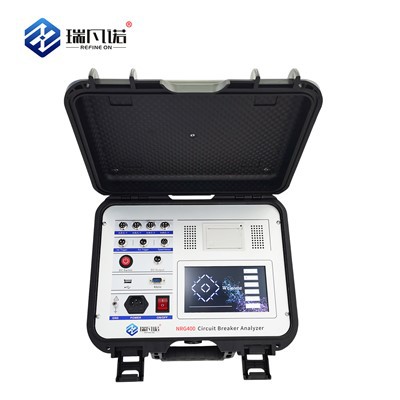
Let’s start with the laboratory – type Partial Discharge Testers. These bad boys are designed for use in a controlled environment, like a lab. They’re super accurate and can provide really detailed results. In a lab, you’ve got the perfect conditions – stable temperature, low interference, and all that good stuff. This means the tester can focus on getting the most precise measurements possible.
One of the big advantages of laboratory – type testers is their high sensitivity. They can detect even the tiniest partial discharges. This is crucial when you’re dealing with high – voltage equipment in a research or quality – control setting. For example, if you’re testing a new type of insulation material, you want to know if there are any hidden partial discharges that could lead to future problems. The lab – type tester can pick up on these small signals and give you a clear picture of the material’s quality.
Another plus is the advanced features they usually come with. These testers often have sophisticated software that can analyze the data in multiple ways. You can look at the discharge patterns over time, compare different samples, and even simulate different operating conditions. This level of analysis is really valuable for researchers and engineers who are trying to understand the behavior of electrical equipment.
However, laboratory – type testers also have their drawbacks. They’re usually pretty big and bulky. You can’t just carry them around easily. They need a dedicated space in the lab, and setting them up can be a bit of a hassle. Also, they’re often quite expensive. The high – end technology and precision components that make them so accurate come at a cost.
Now, let’s talk about field – type Partial Discharge Testers. These are designed to be used out in the real world, on – site. They’re built to be portable and rugged. You can take them to a power substation, a manufacturing plant, or any other place where electrical equipment is in operation.
The portability of field – type testers is a huge advantage. You can quickly move them from one location to another, which is great for maintenance teams. If there’s a suspected problem with a piece of equipment, they can just grab the tester and go check it out right away. This saves a lot of time and money compared to having to transport the equipment back to the lab for testing.
Field – type testers are also designed to be easy to use. They often have a simple interface that allows technicians with basic training to operate them. This means you don’t need a highly specialized engineer to run the tests. You can get quick results on – the – spot, which is really useful for making immediate decisions about equipment maintenance or replacement.
But field – type testers aren’t without their limitations. Because they’re used in less – controlled environments, they’re more prone to interference. Things like electromagnetic noise from other equipment, weather conditions, and even the surrounding terrain can affect the accuracy of the measurements. They also might not have the same level of sensitivity as laboratory – type testers. So, while they can detect most significant partial discharges, they might miss some of the very small ones.
In terms of applications, laboratory – type testers are mainly used for research, product development, and quality control. For example, a manufacturer might use a lab – type tester to test the insulation of a new transformer design before mass – producing it. On the other hand, field – type testers are used for routine maintenance, fault detection, and condition monitoring of existing electrical equipment. A power company might use a field – type tester to check the health of its transformers and switchgear on a regular basis.
When it comes to choosing between the two, it really depends on your specific needs. If you’re in a research or development setting where accuracy and detailed analysis are key, a laboratory – type tester is probably the way to go. But if you need to test equipment on – site and get quick results, a field – type tester is more suitable.
As a supplier of Partial Discharge Testers, I’ve seen firsthand how both types of testers can be valuable in different situations. Whether you’re a researcher, an engineer, or a maintenance technician, having the right tester can make a big difference in your work.

If you’re in the market for a Partial Discharge Tester, I’d love to have a chat with you. We can discuss your specific requirements and figure out which type of tester would be the best fit for you. Don’t hesitate to reach out and start a conversation about how we can help you with your testing needs.
Resistance Tester References:
- Electrical Insulation Handbook, McGraw – Hill
- IEEE Standards on Partial Discharge Testing
Refine On (Hebei) Electric Power Technology Co., Ltd.
Refine On (Hebei) Electric Power Technology Co., Ltd. is one of the most reliable partial discharge tester manufacturers and suppliers in China, also supports customized service. Please feel free to wholesale advanced partial discharge tester at competitive price from our factory. Contact us for quotation.
Address: Building 13, Liandong U Valley, No.64, Jing SAN South Street, Economic Development Zone, Mancheng District, Baoding City, China
E-mail: victor@transformer-test.com
WebSite: https://www.transformer-test.com/
